
WHEEL ALIGNMENT
Wheel alignment bay planning checklist for equipment buyers
Plan a wheel alignment bay by confirming vehicle coverage, working space, lift or platform compatibility, power, calibration, and after-sales support.
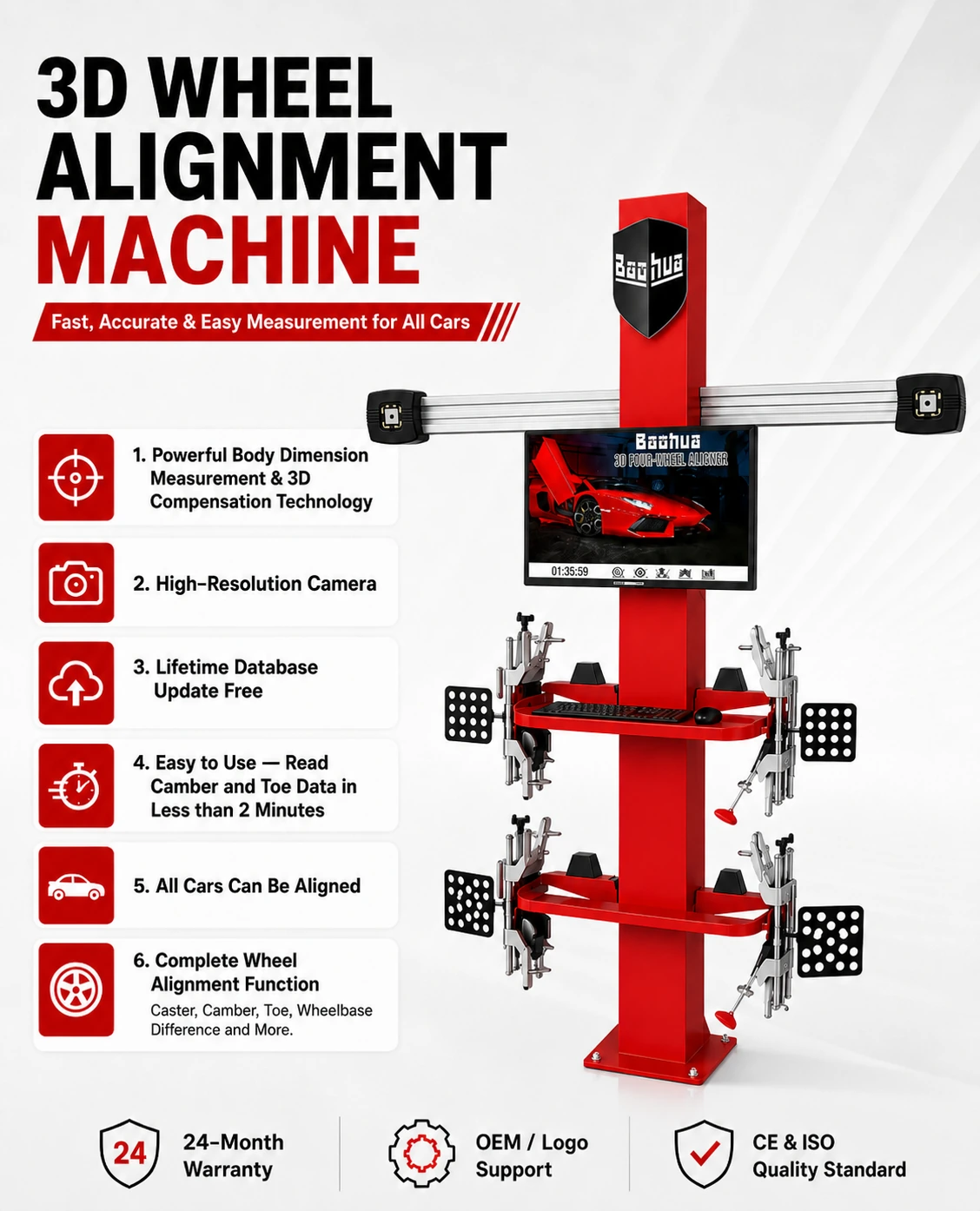
Define the vehicle coverage first
List the passenger cars, SUVs, vans, or commercial vehicles the bay must support. Wheelbase, track width, wheel size, vehicle height, and workshop throughput influence the equipment and layout.
If the workshop serves a mixed fleet, ask the supplier to confirm the working range and included accessories for the exact system rather than relying on a general product-family description.
Plan one complete working area
The aligner, lift or pit, turn plates, rear slip plates, sensor or camera position, console, vehicle approach, and technician space must work together. A machine can fit physically and still be awkward to use if doors, columns, ramps, or traffic routes interfere.
Provide a scaled layout when possible. Mark the clear dimensions, ceiling height, entrances, columns, power points, and the proposed vehicle centerline.
- Straight vehicle approach and exit
- Clear camera or sensor working distance
- Suitable platform level and runout area
- Space to mount targets and move around all four wheels
- Protected positions for the console, computer, and accessories
Confirm platform and accessory compatibility
Check that the lift, alignment rack, or pit supports the required wheelbase and weight. Confirm the position and dimensions of turn plates and slip plates, as well as any jacking beam or wheel-free lifting requirement.
Ask what is included: targets, clamps, turn plates, steering-wheel holder, brake-pedal depressor, computer, display, printer, and calibration tools may vary by configuration.
Prepare power, environment, and data questions
Confirm power requirements and the operating environment for the selected system. Lighting, reflections, vibration, dust, moisture, temperature, floor level, and network access can affect installation or daily use depending on the technology.
Request details about the vehicle database, update method, languages, calibration procedure, training, remote support, and replacement parts before ordering.
Quotation checklist
Send the following information so the proposed configuration can be checked as one working bay.
- Target vehicle types and dimensional range
- Existing or planned lift, rack, or pit details
- A bay drawing with clear dimensions and access route
- Power supply and workshop environment
- Required language, database region, and accessories
- Destination, quantity, installation plan, and support expectations
This guide supports early equipment planning. Final dimensions, specifications, installation instructions, supply scope, and applicable documents must be confirmed for the exact model and site before ordering.